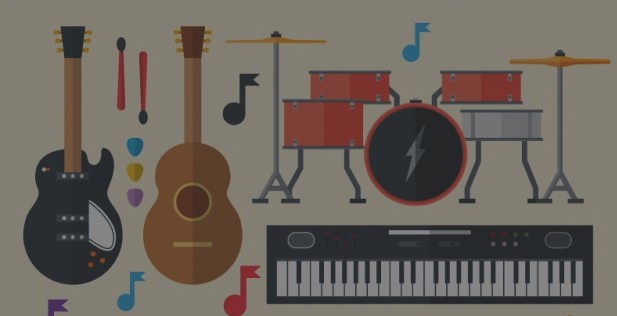
If you’re new to music, and don’t have any previous experience to guide you, the number of instruments to choose from and decisions about where to start can be overwhelming enough to give you that dreaded disease – “paralysis through analysis”, especially if you’re a parent of a young child without any musical experience of your own. Since I’ve been asked the above question a few times over the past month, I thought I’d address it and hopefully I can help point you in the right direction.
At the risk of stating the obvious, if you, or your child, have a definite idea what instrument and/or style of music you’d like to play – stop thinking about it and start playing! Like anything in life, if you’re excited and passionate about it, you’re more likely spend time practicing, playing and improving. If you’ve always wanted to play classical music on the violin, but think your fingers are too big – go ahead and give it a try. You’ll probably have a great time and learn a lot. In the highly unlikely event that you take lessons from several teachers, and they all tell you that your hands are in fact too big to play the violin, then, and only then, should you perhaps consider taking up the cello.
If you’ve always wanted to sing, but were afraid your voice was too –
- High
- Low
- Not in tune/pitchy
- Nasal
- All of the above
Well, go ahead and give it a try anyway! A good teacher can work wonders for you once you relax and learn how to get out of your own way (I know this because I’ve experienced it as the student of several great teachers!). Or, find a very large, loving and accepting choir you can blend into while you learn to sing better.
For adults, or parents of young children, who aren’t sure what instrument to play, or where to start, I’ll describe several instruments I’ve had experience with over the 30+ years I’ve been playing and teaching music. I have several suggestions for quality and entry level instruments in each category, and often help my students determine where and how to get the best value.
PIANO

If you’re an adult with no previous musical experience, or have a young child without a burning desire to play a specific instrument, in my opinion, there’s no better place to start than the piano. It has several advantages over other instruments –
- It has a 7+ octave range, so you’ll learn to read music on both the bass and treble clef (unless you happen to have an incredible ear and decide to only play jazz, like the great pianist Eroll Garner.
- There is no better place to learn music theory and how music works than at the piano. The keys are right in front of you and set up in an orderly manner from top to bottom, making it easy to see and understand how chords and intervals work. If you major in music in college, most schools make you take 1 year of piano for this very reason.
- You can make a lot of music before you need to call your friends to come over and jam with you. Many instruments can only play one note at a time, but the piano has 88 keys and you have 10 fingers (sometimes this can get piano players into trouble and they’ll over play or develop what one of my teachers called “piano-itus”, but that’s a subject for a another blog post). Once you know how to play decently, you can easily play the parts of 2 instruments and add in several more.
The only downsides of the piano are that it can be expensive to purchase initially, although that can be reduced somewhat if you start out on a keyboard with at least 76 notes and weighted keys (not my first choice for beginners, but certainly better than not playing at all) and they’re not very portable, so unfortunately you won’t be taking one camping with you next time you go to the beach.
GUITAR
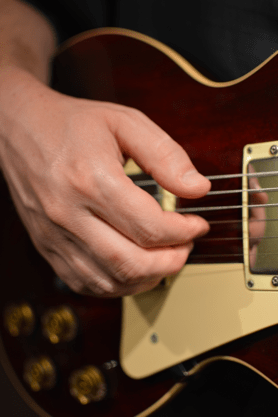 The guitar was my first instrument. I’ll be dating myself here, but when I was a budding youth, I liked to watch and listen to rock and roll videos on MTV after school at the local Boys and Girls club (back when they still showed videos and played music on MTV). Everyone one was having so much fun and the electric guitars were so shiny and cool sounding! Often, I like to think that my tastes have “evolved” to more sophisticated styles of music over the years, like jazz and classical, but who doesn’t like to play and listen some rock and roll on a regular basis? I think some kids, and adults too for that matter, are still attracted to the guitar that for reason, though that rebellious role is probably gradually being taken up by more modern “cutting edge” instruments like drum machines, sampling, turntables, etc.
The pros of the guitar are that you can start out on acoustic or electric. I usually tell people to start out on whichever style of guitar they want to play the most. If they don’t have a preference, I recommend starting out on steel string acoustic. It’s fairly inexpensive to purchase a starting instrument ($150-200) and they’re quite portable, so you can take them camping with you and often on other vacations as well. The only cons to the guitar are that you have to buy and amplifier if you play and electric one ($100-200) and it can be difficult to figure out music theory, because it’s not as clearly laid out (visually) as the piano. However, this is true of most non-keyboard instruments and just takes a bit more effort, or some minor studying of music theory at the piano.
BASS
 I’ve played acoustic bass in the past, but it’s a pretty demanding instrument physically – think big calluses on your fingers, even when compared to the guitar or electric bass, and they’re a fairly expensive instrument to purchase due to the amount of wood and labor involved in making a decent one. I still play and teach electric bass. It’s a great instrument to play if you enjoy being an essential part of the rhythm section and like it when people want you to join their band. It seems like there’s always a shortage of good bass players and you can pick and choose what groups you’d like to join. If you like to play piano, guitar or sing, you will often have to start you own group, because those instruments are more popular. The only real cons to playing bass are the fact that you seldom play chords and you only learn to read the bass clef. Personally, I often find it hard to practice the bass for more than 45 minutes at a time, because I’ve gotten used to being able to make more music and play more notes, with a more versatile solo instrument like the piano or the guitar.
UKULELE
 I’ve had a few beginning ukulele students over the past couple of years. The pros are that the ukulele almost always sounds so happy and pleasant, as well as the fact that they’re extremely portable and very affordable. You can buy a decent sounding starter one for around $40, like I’ve done for my young son. The only cons are you only learn how to read the treble clef and you don’t hear them played in as many different styles of music as many other commonly played instruments.
VOICE
 The pros for singing are many. You don’t have to buy an instrument- you already have it! Singing will help your ear develop musically, even if you switch to another instrument in the future. It’s easy to join a choir and your instrument will be with you wherever you go, although it may not perform as well as other instruments If you don’t take the best care of your body/temple. I don’t really think there are any cons for singing, except perhaps that you’ll have to study music theory a bit more, because you can only sing one note at a time, but this is true of many other instruments too.
DRUMS
 While I don’t teach drums, I encourage you or your family member to play them if you’re passionate about them, just keep in mind that they’re loud! I mean you might have to build a sound proof room in your house, to keep the rest of your family happy, they are so loud. Fortunately, advances in the sound quality and affordability of electronic drum kits have helped this in recent years and we’re all certainly grateful for the amazing drummers in different styles of music over the years from Art Blakey to John Bonham.
In case you now need some comic relief, musician style, check out the flowchart below. Whatever instrument you choose, just make sure you (or your family member) start playing and making music sooner rather than later!
Find your rhythm!
Matt

 It's a Musical Life